A manufacturer spends months refining a product. Tolerances are tight. Performance is proven. The sales team is ready. Then the launch stalls because the name sounds generic, looks awkward on a datasheet, and means nothing to the buyer reading it for the first time.
We see this often. The product is engineered well, but the name is treated like a late-stage creative task instead of a business decision.
That is the mistake.
Branding a product name is not about picking something that sounds clever in a meeting. It is about creating a brand asset that supports search, sales conversations, repeat recognition, CRM tagging, and campaign consistency. A strong name gives your team a cleaner story to tell. A weak name forces everyone to explain too much.
Introduction: Why Your Product Name is a System Not Just a Label
If you sell into manufacturing, distribution, or technical B2B markets, your buyers are usually busy and skeptical. They do not want to decode a vague name or remember a pile of internal product codes. They want a name they can say, search, recognize, and connect to a clear outcome.
A product name sits at the center of several systems at once. It affects your website navigation, sales sheets, Google Business Profile visibility, CRM fields, email workflows, and the language your team repeats every day. When the name is clear and consistent, those systems reinforce each other.
That consistency has commercial weight. Consistent branding across all channels can increase revenue by up to 23%, and 80% of consumers are more likely to purchase from familiar brands they recognize instantly, according to Salesgenie’s summary of branding statistics. For manufacturers, that matters because recognition lowers friction in markets where buyers compare several similar options.
Key takeaway: Your product name is not packaging. It is an operating input for marketing and sales.
A good name helps your team explain less and sell faster. A bad one creates drag in every channel.
Lay the Strategic Foundation for Your Product Name
Most naming projects go wrong before the first idea appears on a whiteboard. The main failure is diagnostic. Teams start brainstorming without agreeing on who the product is for, what problem it solves, or how it should feel in the market.
Start with buyer reality
Before you name anything, define the buyer in plain language. Not broad demographics. Real operating context.
Ask:
- Who signs off: Is the buyer a plant manager, engineer, operations lead, or distributor?
- What they care about first: Speed, precision, uptime, compliance, ease of install, status, or total simplicity?
- What language they already use: Industry shorthand matters, but so does readability outside your company.
If your buyer says “reduce setup time,” but your internal team talks about “adaptive modular throughput architecture,” the naming problem is already visible.
Audit the market before you create
Competitor names tell you what the category overuses. In manufacturing, that usually means some mix of “precision,” “pro,” “max,” “industrial,” or abstract technical jargon that all blurs together.
Review competitor names across:
- Product catalogs
- Website menus
- Trade show materials
- Distributor listings
- Search results for category terms
You are looking for white space. That means finding naming territory your competitors have not occupied clearly.
For example, if everyone in your niche names products around strength and ruggedness, there may be room to own speed, simplicity, control, or ease of integration instead. If everyone sounds cold and technical, a cleaner and more pronounceable name can stand out without becoming soft.
A positioning exercise helps here. If you need a structured way to pin down message territory first, this guide to branding and positioning strategies is useful as a planning reference.
Define naming pillars before ideas
We recommend choosing a small set of naming pillars before brainstorming. Not ten. Usually three is enough.
A few examples:
- Precision: The name should feel exact, controlled, and reliable.
- Clarity: A buyer should understand it without a long explanation.
- Expansion: The system should allow future variants, models, or sub-lines.
Those pillars become filters. If a name sounds exciting but does not fit the pillars, it does not make the shortlist.
Questions to ask before any naming session
Use this as a quick internal checkpoint:
- Can our buyer say the name confidently in a meeting?
- Would the name make sense on a quote, a product page, and a sales call?
- Does it sound like us, or does it sound like any competitor?
- Can we extend it into a family if the product line grows?
- Will the name still work when someone sees it with no context?
Tip: If your team cannot agree on the product’s core promise in one sentence, pause the naming work. The problem is positioning, not creativity.
A strong product name starts with market truth. Without that, brainstorming becomes opinion management.
Generate and Shortlist High-Potential Names
Good naming work is creative, but it should not be chaotic. The strongest teams treat brainstorming like structured exploration. They generate many options, from multiple angles, and then reduce them with clear criteria.
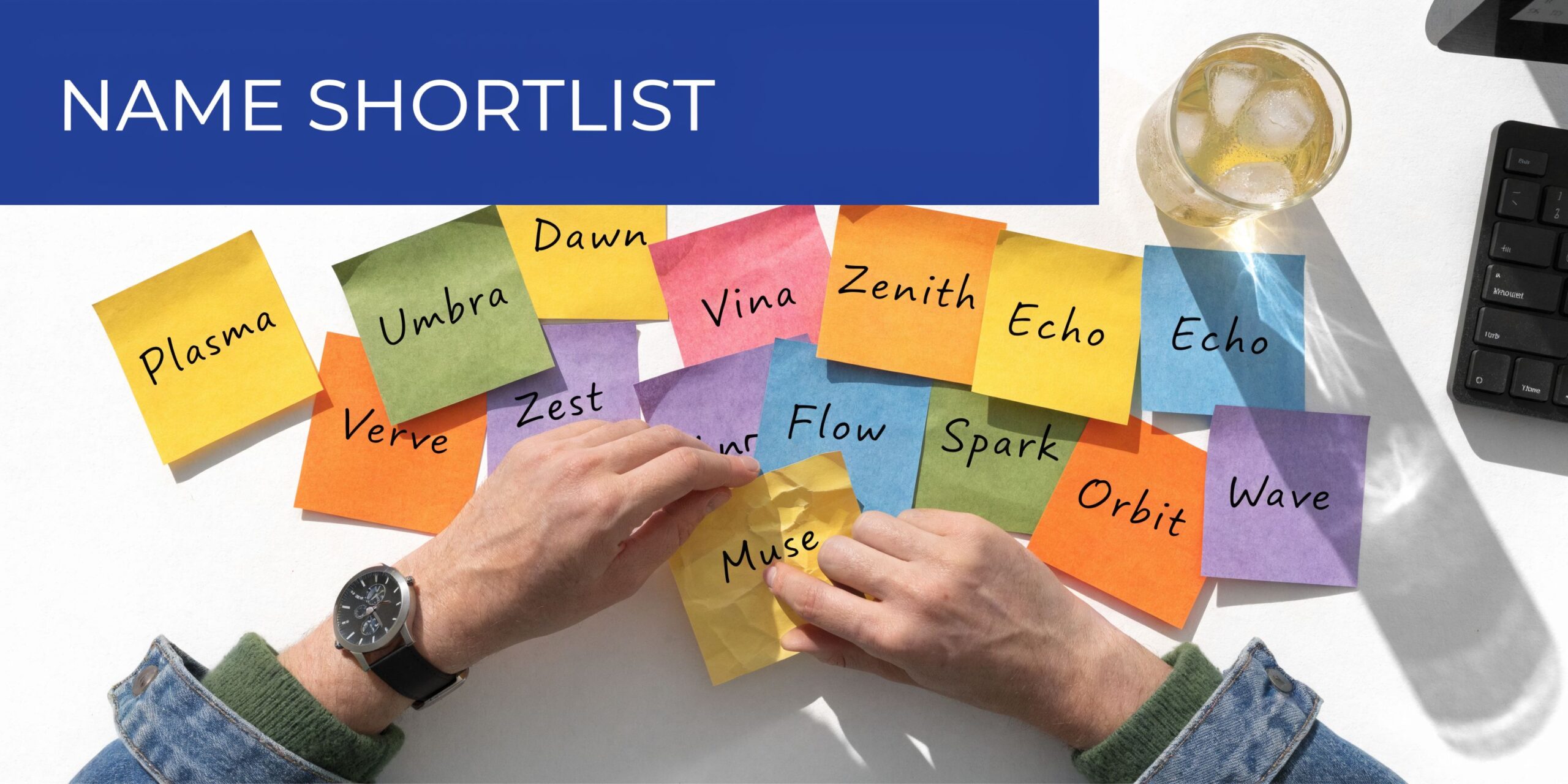
A rigorous naming process for B2B manufacturers includes market research, brainstorming from benefit territories, shortlisting, micro-testing, and advanced testing, and names tested this way can achieve 2 to 3 times higher brand recognition according to SmashBrand’s naming process guide.
Use four naming routes
Most viable product names fall into one of four buckets. Use all four so your team does not get stuck producing the same type of name.
Descriptive names
These say what the product does or what it is.
Examples in style, not claims: names built around terms like control, filter, weld, flow, or guard.
These work when:
- buyers need immediate clarity
- the market is technical
- the sales cycle punishes ambiguity
The trade-off is that descriptive names can sound generic fast.
Evocative names
These suggest a benefit, outcome, or feeling rather than describing the product directly.
In B2B manufacturing, evocative does not have to mean poetic. It can mean a name that implies speed, grip, signal, lift, or certainty.
These work when:
- the category is crowded
- you need more ownable language
- the product has a strong strategic promise
The trade-off is that some evocative names need stronger messaging support at launch.
Invented names
These are created words, blended terms, or modified word forms.
They can be powerful because they are more ownable and easier to trademark if done well. But they fail when they become hard to pronounce, hard to spell, or detached from the product reality.
Lexical hybrids
These combine familiar parts into something new. This is often a practical middle ground for manufacturers.
A hybrid can combine:
- a performance cue
- a material cue
- a motion cue
- a family naming convention
This route often gives you enough distinctiveness without losing clarity.
Run brainstorming by territory, not by random inspiration
Do not ask a room to “come up with names.” That produces predictable filler.
Instead, brainstorm in rounds:
Benefit territory round
Build names around outcomes such as control, speed, uptime, simplicity, or safety.User language round
Pull terms from how engineers, operators, and sales reps describe the problem.Architecture round
Create parent names, variants, and suffix systems that could scale across a product family.Visual and phonetic round
Read names out loud. Look at them on a mock spec sheet, packaging label, and page heading.
Practical rule: If a name feels impressive only when someone explains it, it is not ready.
After a few rounds, you should have a long list. Then the engineering mindset matters more than creativity.
Score names before you debate them
Use a shortlist scorecard. Keep it simple.
| Criteria | What to check |
|---|---|
| Clarity | Does the buyer understand it quickly? |
| Memorability | Is it easy to recall after one exposure? |
| Pronounceability | Can people say it without hesitation? |
| Fit | Does it align with your brand and product promise? |
| Expandability | Can it support future versions or line extensions? |
| Search usefulness | Will it be easy to use in content and product pages? |
Do not let seniority overrule the scorecard too early. The CEO’s favorite idea is still just an idea until it survives customer reality.
A quick visual walkthrough can also help your team pressure-test naming patterns before you narrow the list further:
What usually does not work
These patterns create trouble in B2B naming work:
- Overly abstract names: They force your sales team to explain too much.
- Misspelled names: They create search and pronunciation problems.
- Internal jargon: Buyers outside your company do not care about your shorthand.
- Trend-heavy names: They age fast and often sound interchangeable.
The shortlist should feel disciplined. Not flashy. You are not trying to win an internal vote. You are trying to name something buyers will remember and teams can deploy.
Validate Your Top Choices with Real-World Data
Internal feedback is useful for screening. It is not enough for selection.
A name can sound sharp inside the company and still fail outside it. Technical teams may like precision. Sales may prefer simplicity. Leadership may want something broad enough for future expansion. None of those viewpoints replace buyer response.
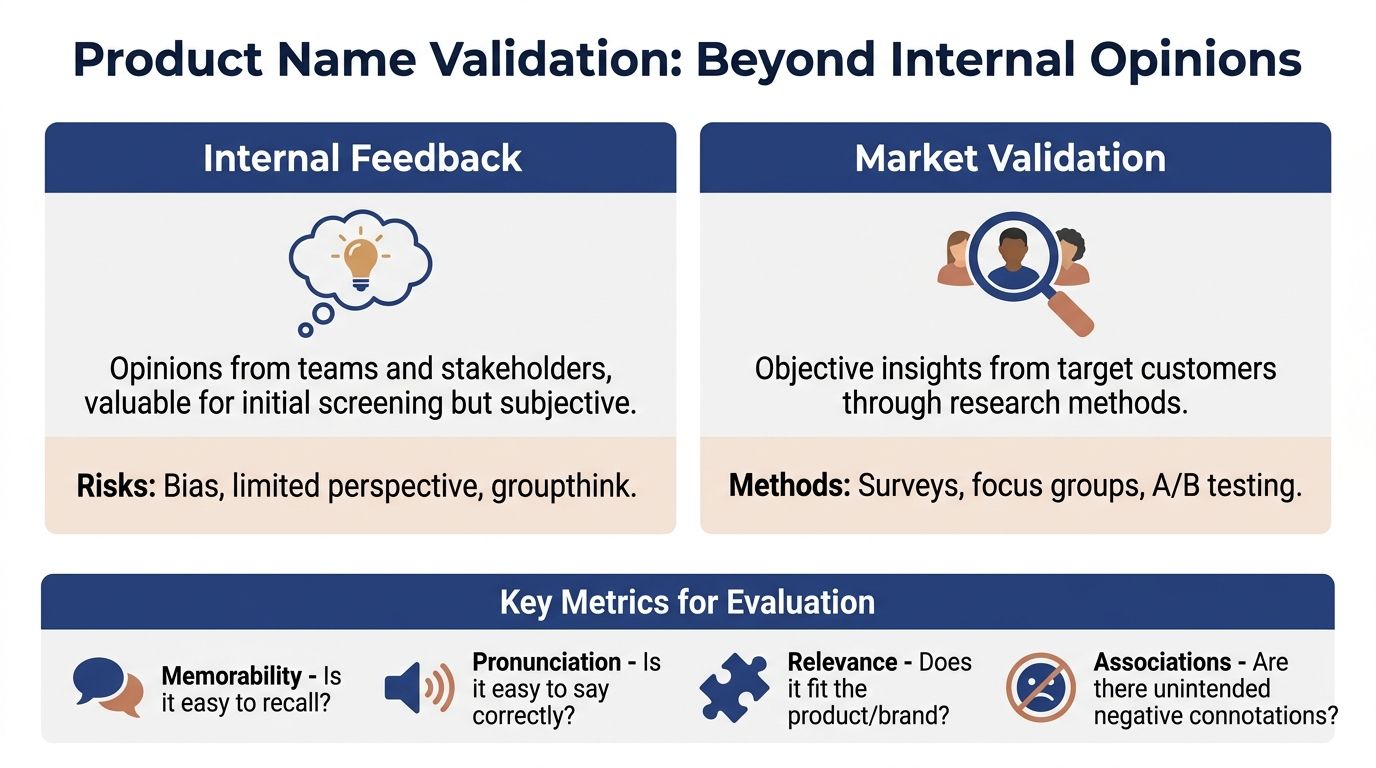
A stronger approach uses layered testing. According to NameRobot’s guide to brand name testing, a multi-phase strategy includes quantitative screening with surveys of more than 1,000 people and a recall goal above 65%, qualitative deep dives through focus groups, and legal vetting. The same source notes that untested names have a 35% failure rate within two years, while properly tested names can boost market share by 12% to 18%.
What to test for
You do not need a giant research program to get value. You need a disciplined test plan.
Focus on four questions:
- Can people remember it?
- Can they pronounce it correctly?
- Does it fit the product and company?
- Does it trigger any wrong or negative associations?
These sound basic, but they reveal most naming risks fast.
Comparison of Product Name Testing Methods
| Method | Best For | Typical Cost | Timeline |
|---|---|---|---|
| Internal stakeholder review | Removing weak ideas early | Low | Short |
| Customer survey | Checking clarity, recall, and preference across a larger sample | Moderate | Moderate |
| Buyer interviews or focus groups | Understanding emotional reaction and language nuance | Moderate to higher | Moderate |
| Micro-ad tests | Seeing how names perform in live-market attention environments | Low to moderate | Short |
| Sales team call feedback | Identifying pronunciation and conversation friction | Low | Ongoing |
The exact spend depends on your audience, market, and tools, so treat cost and timing as relative, not fixed.
If you want outside input on how to structure interviews and live buyer feedback, this resource on market research and focus groups is a practical reference.
Use surveys carefully
Surveys are useful for fast comparison. They are weak when the questions are bad.
Ask buyers to evaluate a small set of names on:
- ease of understanding
- ease of saying
- likely fit for the product category
- strongest and weakest associations
Do not ask leading questions. “Which of these fresh and reliable names do you prefer?” is useless. Neutral wording matters.
Interviews reveal what surveys miss
A short buyer interview often surfaces friction you will not see in numeric scoring.
Listen for:
- hesitation when saying the name aloud
- confusion about what the product is
- wrong assumptions about use case
- unintended connotations in different regions or industries
In industrial B2B, one awkward syllable can create repeated sales friction. This is especially true when distributors, field reps, and customer success teams all need to use the same name naturally.
Tip: Ask interviewees to repeat the name from memory later in the conversation. That exposes recall better than instant reactions.
Micro-tests are often the fastest reality check
A simple ad test can reveal whether a name earns attention. Use neutral visuals and hold the rest of the message as steady as possible.
You are not trying to measure long-term brand equity in a week. You are checking whether one name gets cleaner recognition or stronger early engagement than another.
Useful micro-test formats include:
- paired landing pages
- sponsored social posts with identical creative
- email subject line tests to existing contacts
- recall polls after exposure
Many naming decisions get unstuck at this stage. The argument shifts from “I like this one” to “buyers responded more clearly to this one.”
What to watch for in B2B specifically
Manufacturing buyers often react differently from consumer audiences. They value confidence signals. They also punish names that feel inflated, gimmicky, or vague.
During validation, watch for these trade-offs:
- Clear but generic: Easy to understand, hard to own.
- Distinct but opaque: Memorable, but too much explanation required.
- Technical but narrow: Strong with engineers, weak with broader buying groups.
- Flexible but soft: Extendable brand system, but not enough category strength.
A good name usually wins by balancing clarity and distinctiveness, not by maxing out one at the expense of the other.
Secure Your Name Legally and Digitally
A strong name is not usable until you can protect it and operate with it.
Many teams get careless at this point. They fall in love with a name, design around it, build launch assets, and only then discover a trademark conflict, a blocked domain, or a digital footprint that creates confusion.
Legal checks come before rollout
You do not need to be an attorney to do preliminary screening. You do need discipline.
Start by checking:
- obvious trademark conflicts in your target markets
- competing products with highly similar names in your category
- similar spellings that could create confusion
- whether your intended product family structure creates overlap with existing marks
This first pass does not replace legal counsel. It helps you avoid wasting time on names that already show visible risk.
One common mistake is checking only whether the exact name exists. That is too narrow. Conflicts often come from names that sound similar, look similar, or operate in adjacent classes.
Digital ownership matters just as much
Even if the legal path is clean, digital availability can still weaken the name.
Check for:
- your preferred domain
- realistic domain alternatives
- social handles for your brand and product line
- marketplace and distributor naming conflicts
- search result confusion with unrelated industries
If the exact .com is unavailable, do not force a bad workaround that makes the name clumsy. Sometimes a modifier, product family structure, or revised candidate is better than settling for a name your audience cannot find or type easily.
Local SEO is part of naming strategy
Manufacturers often overlook local search. That is a mistake, especially for regional sales, service, or distributor visibility.
According to Green Will Techs’ discussion of branding mistakes, 40% of machine-related queries are hyper-local, which makes geo-aware naming and packaging more relevant for Google Business Profile and local discovery.
This does not mean stuffing your core product name with awkward location terms. It means thinking through how the name will appear in:
- product pages
- local landing pages
- Google Business Profile descriptions
- service-area content
- directory listings
A clean naming system can support local modifiers without turning into keyword clutter.
What to do if your first choice is blocked
Do not panic and do not compromise too fast.
Work through a decision ladder:
- Check whether the conflict is fatal or manageable
- See if a naming variant preserves the core idea
- Test a lexical or architecture adjustment
- Confirm digital usability before final selection
- Only then return to the shortlist
Key point: Legal and digital screening are not cleanup tasks. They are part of choosing the right name.
A name that looks strong in a workshop but fails legal review or creates search confusion was never a strong name to begin with.
Activate Your New Name in Your Marketing and Sales Systems
A product name only creates value when your systems use it consistently.
That means more than updating the logo file and changing a page title. The name should flow through your site structure, forms, CRM, sales sequences, proposal language, and re-engagement campaigns. If it does not, the name stays decorative instead of operational.
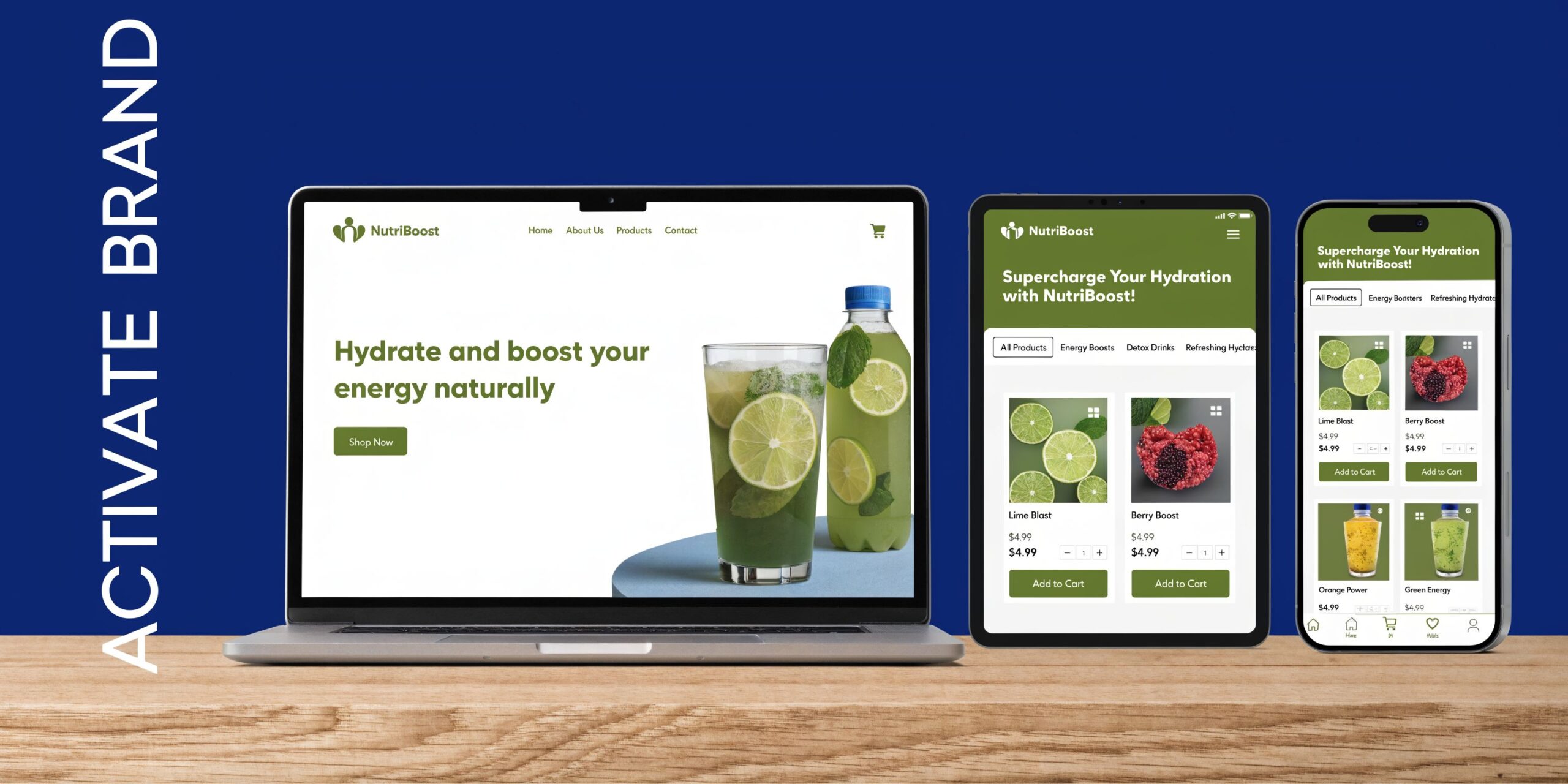
One neglected area is CRM integration. According to MyEmma’s article on underrated brand strategy ideas, 75% of consumers prefer brands that personalize interactions, yet most naming guidance does not explain how a product name should trigger email and SMS automation.
Start with your public-facing assets
The launch sequence should begin with the places buyers see first:
- Website navigation: The name should appear consistently in menus, product pages, and internal links.
- Hero messaging: Explain the name with a simple promise, not internal language.
- Sales collateral: Update line cards, one-pagers, slide decks, and quote templates.
- Email signatures and scripts: Give sales reps a consistent short description they can repeat.
If the product name appears one way on the site, another way in PDFs, and a third way in the CRM, recognition breaks down fast.
Turn the name into a CRM signal
Branding a product name becomes measurable here.
In a system like GoHighLevel, the name should not just sit in copy. It should act as a tracked data point.
A practical workflow looks like this:
Capture interest by product name
Add the product name to forms, quote requests, chat flows, and landing page CTAs.Apply tags automatically
If a lead requests details on a specific product, tag that contact with the exact interest category.Trigger customized follow-up
Send an email or SMS sequence tied to that product’s use case, proof points, and objections.Route the lead correctly
Notify the right salesperson or distributor based on product interest and geography.Track re-engagement by product line
Use the same naming tags later for cross-sell, upsell, and dormant lead campaigns.
That turns the name into a sorting mechanism for your pipeline.
Build a simple naming-driven automation map
Here is a workable model for manufacturers:
| Trigger | CRM action | Follow-up |
|---|---|---|
| Form submission for a named product | Apply product tag | Send product-specific intro email |
| Brochure download tied to a product page | Add interest segment | Send short nurture sequence with relevant application content |
| Quote request mentioning a product family | Notify sales owner | Create task for direct outreach |
| Past customer clicked product update email | Move to reactivation segment | Send SMS or email with next-step offer |
The key is consistency. Use the exact same product naming structure across pages, forms, tags, and workflows.
Protect the rollout as you activate it
Before rollout, make sure your naming use stays aligned with your legal review. If your team needs a plain-English overview of what creates risk, this primer on trademark infringement is a useful operational reference.
It is important to remember that rollout errors often happen after approval. A team changes spacing, adds a sub-label, or shortens the name in a way that weakens consistency or creates confusion.
Match activation to the product life cycle
A newly launched product name needs different support than a mature line extension. Early on, your messaging should focus on orientation and association. Later, you can lean more on repetition, segmentation, and reactivation.
That is why product naming should connect to broader product life cycle marketing decisions. The same name may need a different workflow in launch, growth, and retention phases.
One practical implementation pattern
For a manufacturer using GoHighLevel, one option is to create:
- a custom field for product interest
- tags for each product family
- separate workflows for first inquiry, quote follow-up, and dormant reactivation
- reporting by named product line
Machine Marketing offers this kind of CRM setup and workflow customization as part of GoHighLevel implementation for B2B operators, alongside website, email, and automation work. The important point is not the vendor. It is the structure. The product name should feed your system, not just your design file.
Practical takeaway: If your CRM cannot tell you which product name generated the inquiry, your naming work is underutilized.
A good product name should improve recognition. A great one also improves routing, personalization, and follow-up quality.
Your Next Step in Building a Memorable Brand
The useful way to think about branding a product name is simple. You are not naming in isolation. You are building a repeatable system that starts with market diagnosis, moves through structured idea generation, survives validation, clears legal and digital checks, and then plugs into the way your team sells.
That is why the strongest names are rarely the most clever. They are the ones that hold up under pressure. Buyers understand them. Sales teams use them naturally. Marketing can scale them. CRM workflows can track them.
If you want another outside perspective on the broader discipline of building a memorable brand, that piece is a useful complement to the operational approach covered here.
Start with the first diagnostic move. Audit your buyer language and your competitor naming environment. That step usually exposes the problem faster than another brainstorming session.
Then make the name do real work. Put it where buyers search, where sales teams speak, and where your CRM can act on it.
If you want help diagnosing your current naming system, mapping it into GoHighLevel, or building a launch plan around a product line, contact Machine Marketing. We can help you turn a product name from a label into a working part of your lead generation system.