Your website may be the weakest part of your sales process, even if your shop floor runs well. A Raleigh manufacturer adds a new product line, updates a few photos, and expects the site to help sales. Instead, inquiries go to a generic inbox, forms don't feed the CRM, and the pages that should rank for local searches barely explain what the company makes.
That's the core problem with many Raleigh NC web development projects for manufacturers. The issue usually isn't design alone. It's the missing system behind the site: scope, integrations, content, ownership, and follow-up. If you're comparing agencies, freelancers, or internal rebuild options, you need a plan that matches how industrial buyers research vendors.
A useful web project for a manufacturer should help you get found, qualify the right inquiries, and move sales data into the tools your team already uses. If mobile speed matters for your field sales reps or distributors, a progressive web application strategy can also be worth reviewing before you approve architecture decisions.
Most manufacturers don't need a flashy site. They need a practical one. If you're evaluating an industrial website design approach, start with the parts that affect quoting, lead handling, and search visibility.
Table of Contents
- Introduction to Raleigh NC Web Development
- Plan Project Scope Goals and Technical Requirements
- Draft RFP and Hire Local Developers
- Manage Development Timeline Budget and Collaboration
- Optimize for Local SEO and CRM Integration
- Measure Post Launch Performance and Iterate
- Conclusion and Next Steps
Introduction to Raleigh NC Web Development
Raleigh manufacturers often reach the same point. The company has solid capabilities, experienced people, and equipment worth talking about, but the website still reads like a brochure from a different era. A prospect lands on the site, can't tell which industries you serve, doesn't see clear next steps, and leaves.
That gap gets expensive when you launch a new service, open a new territory, or ask outside sales to drive traffic to a site that doesn't support them. We've seen this pattern in metal fabrication, plastics, machine shops, and industrial services. The website exists, but it isn't connected to the way the business sells.
A manufacturer rarely needs more pages first. It usually needs clearer positioning, tighter conversion paths, and better handoff into the sales process.
Raleigh is a strong market to build in because the area has deep technical talent. Raleigh holds the #10 highest concentration of software developers in the United States, with 13,110 software developers in the metro area, according to this Raleigh software developer concentration report. That gives local businesses access to qualified development support, but talent alone won't fix a poorly defined project.
The companies that get better outcomes usually slow down long enough to answer a few hard questions first. What should the site do? Which pages matter most? Where should lead data go? What will the sales team use after launch? Those answers drive everything that follows.
Plan Project Scope Goals and Technical Requirements
A web project usually drifts because nobody writes down the operating assumptions. One stakeholder wants a visual refresh. Another wants a product catalog. Sales wants better lead quality. Operations wants fewer manual handoffs. If you don't force those priorities into a brief, your developer ends up guessing.
Start with the business problem
Begin with the reason the project exists. For a Raleigh metal fabricator, that might be poor lead quality from a generic contact form. For a contract manufacturer, it might be that buyers can't find process pages for CNC machining, assembly, or finishing. For an OEM supplier, the problem may be that reps send traffic to pages that don't answer technical questions.
Write your goals in plain language:
- Lead generation: Generate inquiries from buyers who match your target industries and capabilities.
- Sales support: Give reps and distributors pages they can send prospects without extra explanation.
- Operational fit: Route form fills, quote requests, and call tracking into your CRM or marketing automation platform.
- Performance: Make the site easy to use on phones, tablets, and desktop devices.
- Content control: Let your team update core pages without waiting on a developer for every change.
A practical planning aid helps here. This checklist for a website creation process is a good way to gather missing requirements before you ask anyone for pricing.
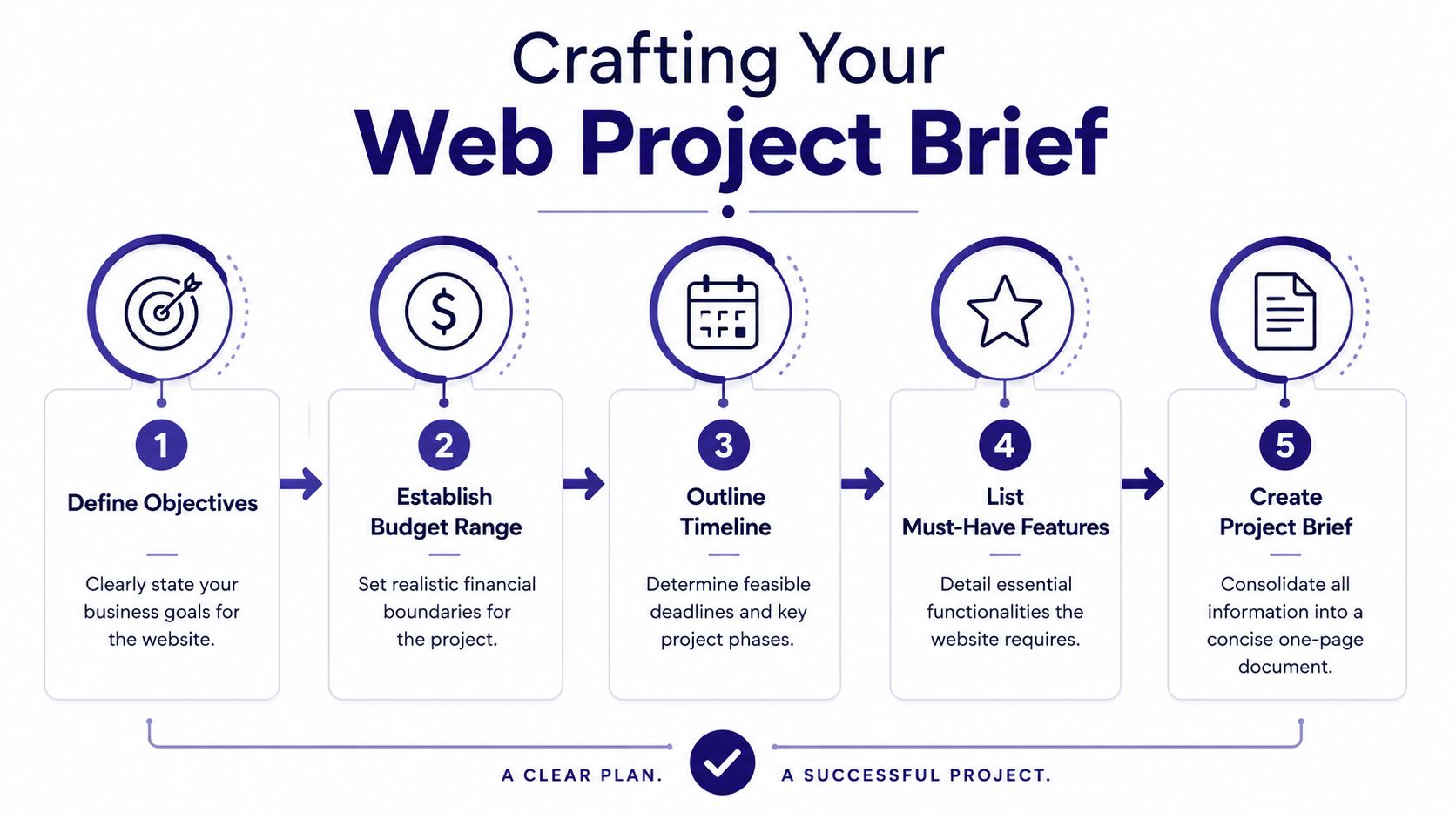
Turn needs into a one page brief
Your brief doesn't need to be long. It needs to be specific. Keep it to one page if possible.
Include these items:
| Project item | What to define |
|---|---|
| Primary objective | What business result matters most |
| Audience | Engineers, procurement, plant managers, distributors, or mixed audiences |
| Must-have pages | Industries, capabilities, materials, certifications, quote request, careers |
| Integrations | CRM, forms, chat, analytics, marketing automation, ERP-adjacent workflows |
| Constraints | Internal review delays, compliance review, limited photography, old CMS content |
| Ownership | Who approves copy, who approves design, who signs off before launch |
Practical rule: If a feature sounds helpful but no one owns it after launch, it probably shouldn't be in phase one.
This discipline matters even in a talent-rich market. Raleigh gives you access to developers, but availability and specialization still vary. A local team may be strong in WordPress builds yet weak in CRM workflow design. Another may build custom tools well but struggle with industrial messaging. Scope protects you from buying the wrong type of expertise.
Draft RFP and Hire Local Developers
A weak RFP creates confusing proposals. One shop bids a custom build. Another proposes a theme-based CMS. A third leaves out migration work and forms. You can't compare price if each vendor is solving a different problem.
What a useful RFP should include
Start with the core sections every bidder needs to see.
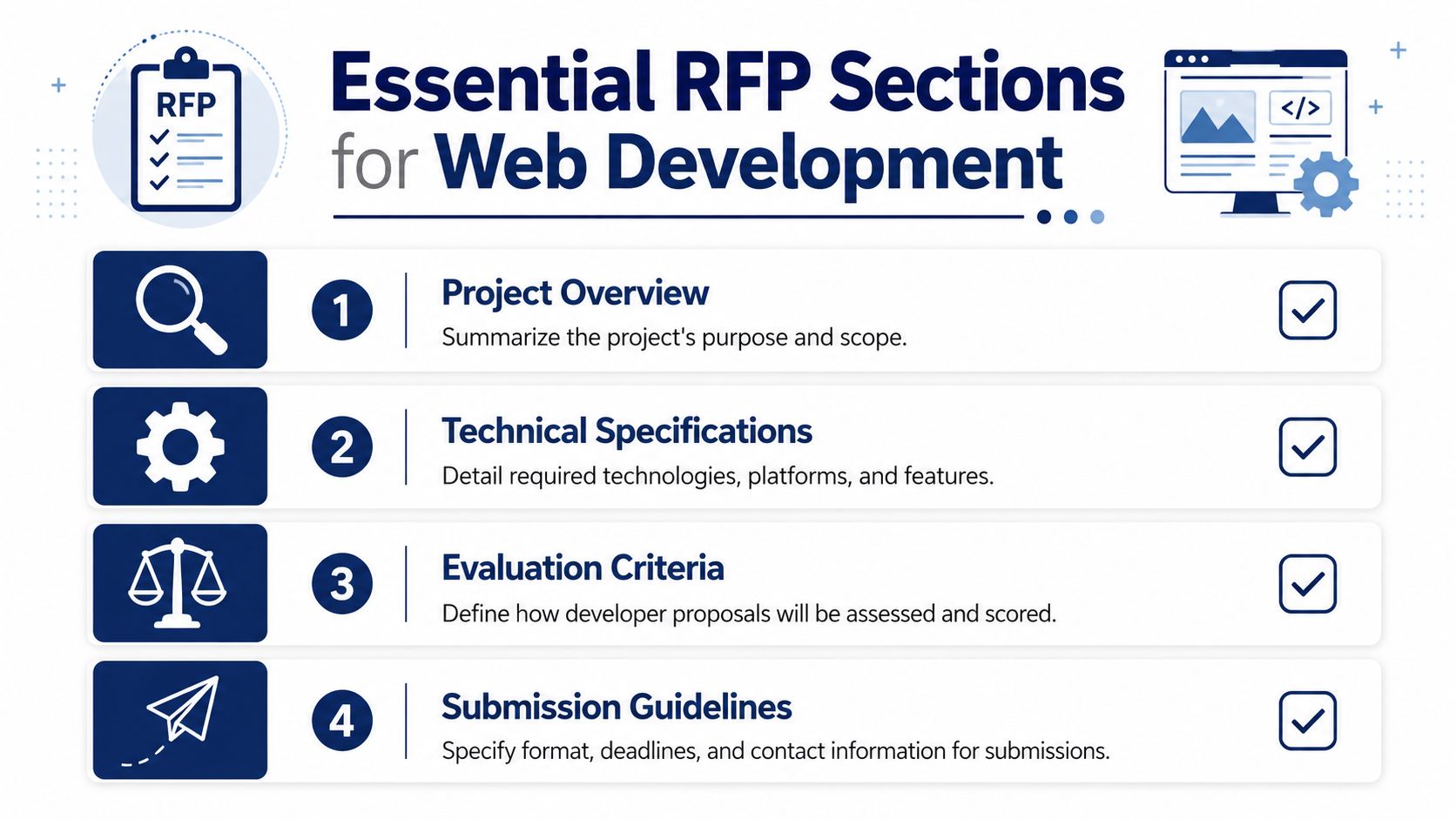
Your RFP should include:
- Project overview: What your company does, who the buyers are, and why the rebuild is happening now.
- Technical specifications: CMS preferences, CRM needs, required forms, analytics setup, hosting constraints, and any system dependencies.
- Evaluation criteria: How you'll weigh industrial experience, communication, process, migration approach, and post-launch support.
- Submission guidelines: Deadlines, expected format, contact person, and how vendors should price optional items.
For a starting framework, use this guide to creating an RFP for a website project. It helps keep proposals comparable, which is where most SMB hiring mistakes begin.
Raleigh's labor market also affects hiring reality. Software Developer is the top recurring job in demand in the Raleigh region, with professionals holding five or more years of in-demand skills earning $125,000 to $130,000 annually, according to this Raleigh tech hiring report. That tells you two things. Good local developers are available, and strong ones won't compete on bargain pricing.
A short video can help your team think through the buying process before interviews begin.
How to compare proposals without guesswork
Don't score bids on design comps alone. For manufacturers, execution quality often shows up in places that aren't flashy.
Ask each firm:
- How will you handle redirects and content migration?
- Who maps forms into the CRM and tests notifications?
- What happens if our product pages need a filtered structure later?
- How do you manage revisions when internal stakeholders disagree?
- What training and documentation are included at handoff?
Watch for red flags:
- Vague process: If the proposal says “discovery” but doesn't show deliverables, expect confusion later.
- No integration detail: If forms, CRM mapping, or automation triggers are treated as minor add-ons, they may fail in launch week.
- Overpromising timelines: Fast is attractive. Unrealistic is expensive.
- No post-launch plan: A site that launches without support ownership becomes stale quickly.
The best proposal usually isn't the one with the most features. It's the one that makes responsibilities, assumptions, and exclusions obvious.
Manage Development Timeline Budget and Collaboration
Projects stay healthy when decisions happen on schedule. They slip when leadership goes quiet for two weeks, product photos arrive late, or everyone assumes someone else approved the copy. That's why project management for Raleigh NC web development should focus less on software itself and more on decision flow.
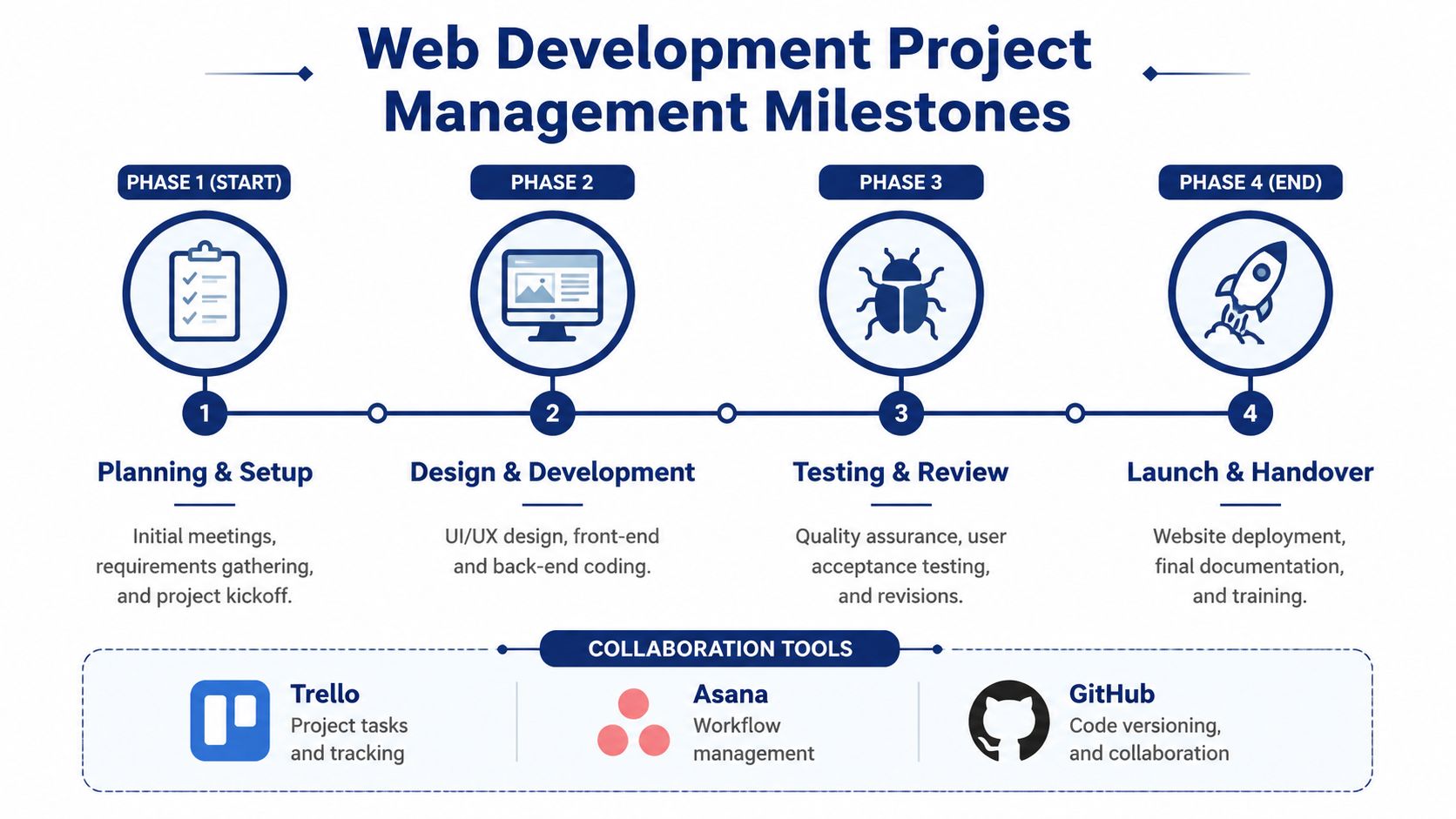
Build milestones around decisions
A manufacturer usually needs four working phases:
- Planning and setup: Final requirements, sitemap, page priorities, user roles, and kickoff.
- Design and development: Wireframes, page templates, CMS setup, form logic, and integration work.
- Testing and review: Device testing, content QA, form submission checks, CRM routing, and stakeholder signoff.
- Launch and handover: Go-live, redirects, access transfer, documentation, and internal training.
Use tools that fit the team's behavior. Trello works for lightweight visibility. Asana is better when multiple departments need assigned tasks and dates. GitHub matters when custom development is involved and you need version control, issue tracking, or code review discipline.
A simple rule helps. Every milestone should end with a named approver and a due date. If there's no owner, there's no milestone.
Control budget with visibility not optimism
Budget problems usually come from change orders that didn't look like change orders at the time. A new resource library. A distributor portal. Revised messaging for three industry pages. Expanded schema markup. None of those are wrong. They just need to be treated as additions.
The local labor benchmark gives useful context. As of June 28, 2026, the average hourly pay for web developers in Raleigh, NC was $43.86, with most workers earning between $33.65 and $53.03 per hour, based on Raleigh web developer pay data. Agency billing won't mirror hourly wage exactly, but the range helps owners understand why “small” requests add up.
Use a shared tracker with these columns:
| Item | Owner | Status | In scope | Impact |
|---|---|---|---|---|
| Homepage revisions | Marketing lead | In review | Yes | Timeline only |
| New RFQ workflow | Sales ops | Proposed | No | Budget and testing |
| Product PDF library | Engineering | Approved | Yes | Content load |
| Distributor login | Leadership | Deferred | No | Future phase |
Weekly check-ins work best when the agenda is fixed: decisions needed, blockers, change requests, and next approvals.
Optimize for Local SEO and CRM Integration
A manufacturer's website can look polished and still fail at lead generation. The common reason is disconnect. Search visibility lives in one lane, form handling in another, and sales follow-up in someone's inbox. That setup breaks down fast.
Why manufacturers need a different SEO structure
Many articles about Raleigh NC web development focus on generic tactics for web professionals, not on how industrial companies create return from the site itself. That gap is real. Existing content on the topic often misses the needs of industrial and manufacturing firms that require websites tied to CRM and automation systems, as noted in this discussion of Raleigh web development content gaps.
For local SEO, manufacturers need a cleaner structure than service businesses with broad consumer traffic. A solid starting point includes:
- Google Business Profile alignment: Make sure business category, service description, and contact data match the actual operation.
- Location-aware pages: If you serve Raleigh, the Triangle, and surrounding industrial markets, build pages that reflect actual service geography and capabilities.
- Capability pages: Separate welding, machining, fabrication, controls integration, or finishing if buyers search those terms differently.
- Structured data: Help search engines understand your company, location, and page purpose.
- Technical content: Publish pages that answer practical buyer questions, not generic marketing copy.
A machine shop that tries to rank one vague “services” page for every process usually underperforms. Buyers want specificity. Search engines do too.
Connect every inquiry to the CRM
The website should feed your sales process, not create extra admin work. If your forms only send emails, your team can't manage response time, attribution, or pipeline follow-up consistently.
Map each conversion point before launch:
- Quote request forms should create the right record in the CRM and tag the inquiry source.
- General contact forms should route by territory, capability, or business unit.
- Phone call tracking should log lead details where sales can act on them.
- Chat or appointment tools should trigger an internal workflow, not just a notification.
Here's the practical test. If a buyer submits a form at 4:30 p.m. on Friday, does your system send an email, or does it create a task, assign an owner, and preserve the lead source? Manufacturers that answer that question early build better systems.
A website isn't integrated because it has a form. It's integrated when the form starts a reliable business process.
Measure Post Launch Performance and Iterate
Launch day is a handoff point, not the finish line. Most manufacturers should expect to refine copy, tighten forms, fix weak pages, and improve routing after real users start interacting with the site.
Track the signals that affect revenue
You don't need a complex dashboard to start. You need a dashboard your team will check.
Focus on a short set of measures:
- Qualified inquiries by source: Which channels send the right type of lead.
- Form completion behavior: Where users start and abandon key forms.
- Top landing pages: Which capability and industry pages attract first visits.
- Response workflow health: Whether leads enter the CRM correctly and get assigned.
- Sales feedback: Whether reps say leads are more relevant after launch.
Use tools your team can maintain. GA4, Google Search Console, your CRM reporting layer, and call tracking software are usually enough for an SMB manufacturer. The key is alignment. If sales rejects most inquiries from one page type, marketing should know quickly.
Use reviews to drive updates
Set a recurring review cycle. Monthly is usually enough right after launch. Quarterly works well once the system stabilizes.
A useful review agenda looks like this:
- Which pages are attracting the most initial visits?
- Which forms create usable sales conversations?
- Where are visitors dropping off?
- What questions are prospects still asking reps that the site should answer?
- Which requested site changes belong in the next sprint, and which should wait?
One practical template is to keep a backlog with three labels: fix now, test next, and defer. That prevents every idea from becoming urgent and protects the site from random edits that weaken messaging.
Post-launch momentum usually comes from small, repeated improvements. Better page clarity, cleaner forms, stronger routing, and sharper sales feedback loops.
Conclusion and Next Steps
Good Raleigh NC web development for manufacturers isn't about chasing trends. It's about building a system that supports sales, fits operations, and gives your team control after launch. That means defining scope clearly, hiring with discipline, managing approvals tightly, connecting SEO to CRM workflows, and reviewing performance after the site goes live.
If you're preparing for a rebuild, the best next move is simple. Create a one-page brief, list your required integrations, and audit how inquiries move from the website into sales.
If you want a practical diagnosis before you commit budget, Machine Marketing helps manufacturers and industrial businesses connect website redevelopment, CRM workflows, SEO, and lead generation into one usable system.