If you're a manufacturer, this situation probably feels familiar. Leads come in from a trade show, then go quiet for weeks. A referral turns into a solid opportunity, but your website inquiries are inconsistent. Sales keeps asking for better follow-up, marketing sends the occasional newsletter, and nobody can clearly show which emails influenced actual revenue.
That's where most industrial companies get stuck. They treat email as a side task instead of a system. In manufacturing, that's a mistake because your buyers rarely make fast decisions. Engineers need documentation. Procurement needs timing and pricing confidence. Operations teams need reassurance that you can deliver.
Email marketing for manufacturers works when it's built like an operating system, not a broadcast tool. Done well, it gives you a way to capture interest, nurture technical buyers, trigger sales action, and measure what moved a contact from inquiry to quote to customer.
Table of Contents
- Stop Guessing and Start Building Your Lead Generation Engine
- Building Your Foundation Audience Lists and Compliance
- Designing Your Email Machine Key B2B Sequences
- Connecting the System CRM and GoHighLevel Automation
- Fueling the Engine Deliverability and Technical Health
- Measuring and Optimizing Your System Performance
Stop Guessing and Start Building Your Lead Generation Engine
Most manufacturers don't have a lead problem. They have a systems problem.
The demand signals are usually there. Website visitors download a spec sheet. Someone stops by the booth at a trade show. A buyer asks for pricing and then disappears for a month. Without a structured follow-up process, those contacts sit in inboxes, spreadsheets, and sales reps' memories until the opportunity fades.
That's why email marketing for manufacturers deserves a different frame. It isn't “sending newsletters.” It's the mechanism that keeps a buyer moving when sales cycles stretch, multiple stakeholders get involved, and your team needs a repeatable way to stay relevant.
The business case is strong. Email delivers an average return of $36 for every $1 spent, and 59% of B2B marketers identify it as their most effective channel for revenue generation according to Emailchef's email marketing statistics roundup. That matters even more in industrial markets, where technical buyers respond to useful information instead of broad promotional messaging.
If you're trying to build steadier demand, this sits right beside a broader lead generation system for manufacturers. Email doesn't replace your website, SEO, trade shows, or sales team. It connects them.
Practical rule: If a lead can enter your business through more than one path, email should be the follow-up layer that makes every path more productive.
What works is simple to describe and harder to execute well. You need a clean audience, relevant technical content, automations tied to buyer behavior, and CRM visibility so sales can act quickly. What doesn't work is the usual patchwork approach: one master list, one generic monthly blast, no segmentation, and no handoff to the sales team.
The companies that win with email don't guess. They build a machine, test it, and improve it.
Building Your Foundation Audience Lists and Compliance
The list is the asset. If it's messy, outdated, or poorly segmented, everything built on top of it gets weaker.
Manufacturers often start with a pile of contacts from different places: ERP exports, rep lists, trade show scans, quote requests, service customers, distributor contacts, and personal Outlook folders. That feels like a good starting point, but a big list isn't the same as a useful one.
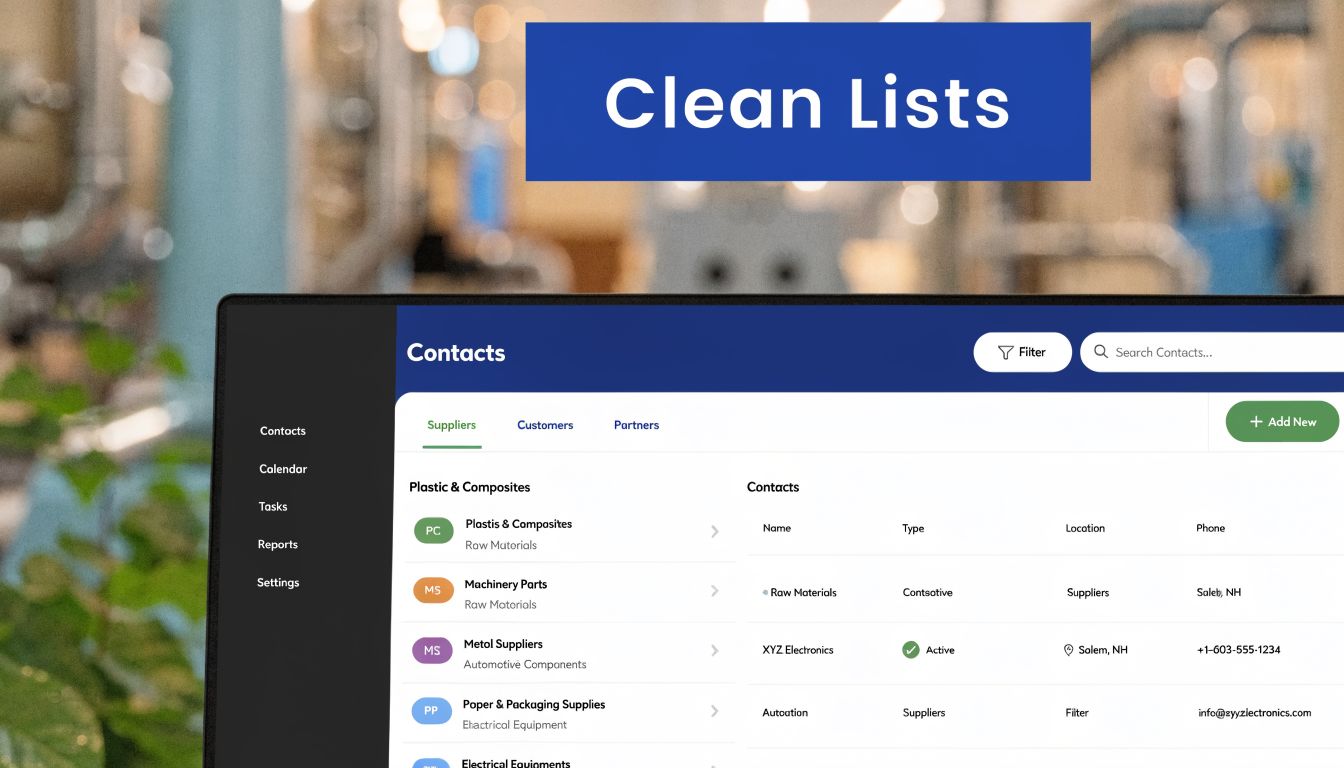
Segment by buying reality, not convenience
A single master list creates generic messaging. Generic messaging creates low relevance. In manufacturing, relevance is everything because different contacts care about very different things.
Segment by role first. Engineers usually want drawings, tolerances, materials, testing information, and product details. Procurement cares about lead times, pricing process, supply continuity, and vendor confidence.
Segment by market or application. Aerospace buyers don't evaluate suppliers the same way medical, energy, or general industrial buyers do. If your capabilities serve multiple sectors, your messaging should reflect that.
Segment by relationship stage. Keep current customers, active opportunities, distributor partners, dormant leads, and trade show contacts in separate buckets. The right next email for each group is different.
This isn't just organizational housekeeping. Segmenting by factors like job role can yield 20 to 35% higher open rates, and engineers open 34.48% of highly relevant emails according to Stream Creative's manufacturing email benchmarks.
A clean list doesn't mean a small list. It means every contact has a reason to be there and a clear path for what they should receive next.
Build the list from real manufacturing touchpoints
List growth works best when it's tied to the information your buyers already want.
Good entry points include:
- Technical resources: CAD files, spec sheets, material comparison guides, maintenance checklists, and capability brochures.
- Commercial resources: RFQ follow-up forms, quote request confirmations, onboarding documents, and reorder workflows.
- Event follow-up: Trade show scans, plant tour attendees, webinar registrants, and association event contacts.
- Website conversion points: Contact forms, gated resources, sample requests, and newsletter signups that set clear expectations.
A practical standard is permission and context. If someone filled out a quote form for one product line, don't drop them into a generic all-company list with unrelated updates. Tag the source, tag the interest, and start with content connected to that action.
If your team needs a good baseline on consent-first list growth, this primer on ethical email list building for startups is useful because the core permission principles apply just as much to industrial firms as they do to younger companies. For manufacturers specifically, we've also outlined seven ways to grow an industrial email list without turning the database into a junk drawer.
Protect the asset with compliance and hygiene
Compliance isn't glamorous, but it protects your sender reputation and your brand.
Your list process should include:
- Clear consent records: Know how each contact entered the database.
- Straightforward unsubscribe handling: Don't make people hunt for the exit.
- Source tracking: Trade show import, form submission, customer file, rep upload, or manual add.
- Regular cleanup: Remove duplicates, invalid addresses, and contacts that no longer fit your audience.
Here's the trade-off. Some teams resist removing contacts because they're worried about shrinking the database. That's the wrong metric. A bloated list can hurt relevance, obscure reporting, and create false confidence.
Use a simple intake checklist before any contact enters your system:
| Check | What to confirm |
|---|---|
| Permission | Did the contact opt in or reasonably expect follow-up? |
| Source | Do you know where the contact came from? |
| Segment | Is role, market, or relationship stage assigned? |
| Next step | Is there a defined email path for this contact? |
When this foundation is clean, your campaigns stop feeling random. Your content gets sharper, your sales team gets better context, and your database starts working like infrastructure instead of storage.
Designing Your Email Machine Key B2B Sequences
Once the list is structured, the next job is building the flows that turn contacts into conversations and customers into repeat buyers.
The easiest way to think about this is to follow one contact through the system. A plant engineer downloads a CNC machine capability sheet. A purchasing manager at the same company later asks for a quote. An existing customer then goes quiet after installation. Those are three different situations, and each one needs a different sequence.
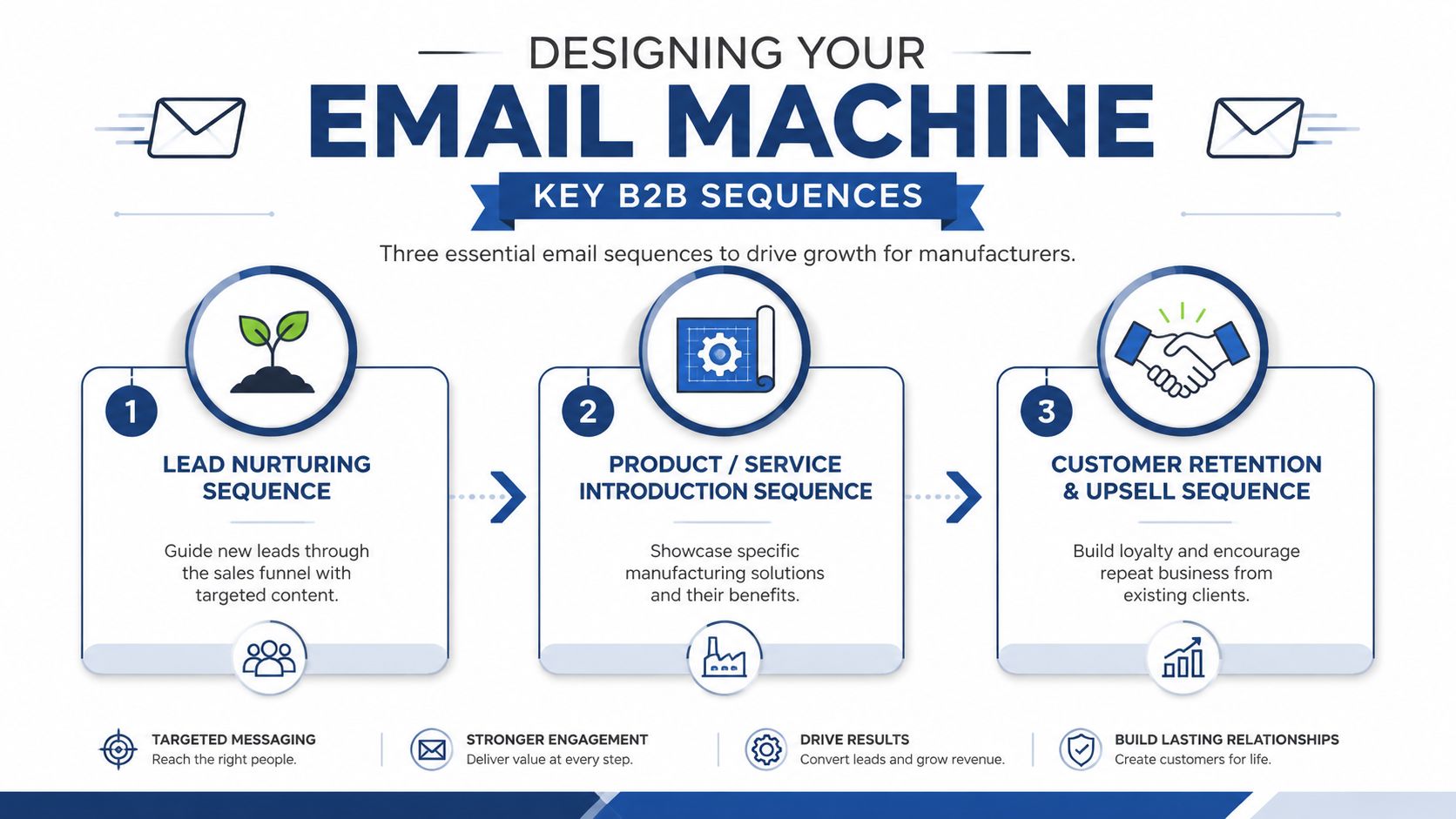
Here's a practical blueprint:
| Sequence Type | Primary Goal | Target Audience | Example Trigger |
|---|---|---|---|
| Lead Nurture | Move inquiry toward a sales conversation | New leads, spec sheet downloaders, quote form contacts | Form submission or content download |
| Customer Onboarding | Reduce confusion and build confidence after purchase | New customers, first-time buyers, new accounts | Closed sale or first order |
| Re-engagement | Restart stalled conversations | Inactive leads, dormant customers, cold opportunities | No engagement or no activity for a defined period |
Lead nurture sequence
This is the sequence most manufacturers need first. Not because it's flashy, but because too many inbound contacts get one response and then silence.
A strong nurture flow for a CNC machine manufacturer might look like this:
- Email one: Deliver the requested resource, confirm the product category, and set expectations.
- Email two: Share a focused application guide, such as material considerations or tolerance ranges.
- Email three: Address buyer risk with a capabilities overview, certifications, or process walkthrough.
- Email four: Invite the next step, such as a consult, plant discussion, or quote review.
Subject lines should sound like they came from a competent industrial supplier, not an ecommerce brand. Better examples include:
- Material selection guide for high-stress machining
- What to review before requesting a CNC quote
- Tolerance, throughput, and machine fit for this application
Body copy should stay specific. Instead of “Learn more about our solutions,” say “See how this machine handles repeatability requirements for tight-tolerance parts.”
Send the next most useful answer, not the next scheduled promotion.
The mistake here is pushing for the meeting too early. Early-stage technical buyers often need confidence before they need a salesperson.
Customer onboarding sequence
Many manufacturers underuse onboarding email. That's a miss because new customers are at peak attention right after purchase.
An onboarding sequence should make the handoff from sales to operations feel organized. It can include welcome messaging, documentation, support contacts, training resources, ordering procedures, and what the customer should expect next. If you sell equipment, installation prep, maintenance guidance, and service contact information can be included.
This sequence does more than reduce support friction. It also shapes perception. Buyers judge reliability partly by how clearly you communicate after the sale.
A simple onboarding set for an industrial supplier might include:
- A welcome email from the account owner with direct contact details
- An implementation email outlining milestones, documents, and responsibilities
- A resource email linking to manuals, FAQs, maintenance content, or reorder instructions
- A follow-up email asking if the team has what it needs before production or deployment
Re-engagement sequence
Not every stalled lead is dead. Sometimes the timing changed. Sometimes the internal champion got busy. Sometimes your last message wasn't relevant enough.
Re-engagement should feel like a reset, not pressure. Good topics include a new application note, a product change, an industry-specific resource, or a straightforward check-in tied to known interest.
For example:
- Still evaluating machines for aluminum throughput?
- Updated spec sheet for the model you reviewed
- Should we keep sending machining resources on this product line?
That last kind of message works because it's respectful. It gives the contact control and gives you a cleaner signal.
What doesn't work is dropping old leads back into your generic newsletter and hoping they wake up. Re-engagement needs context. If the contact originally cared about one machine type, one process, or one use case, start there.
Connecting the System CRM and GoHighLevel Automation
Most email programs break at the handoff point. Marketing sends. Sales waits. Nobody knows which click mattered, which lead is heating up, or which campaign influenced a quote request.
That gap is expensive.
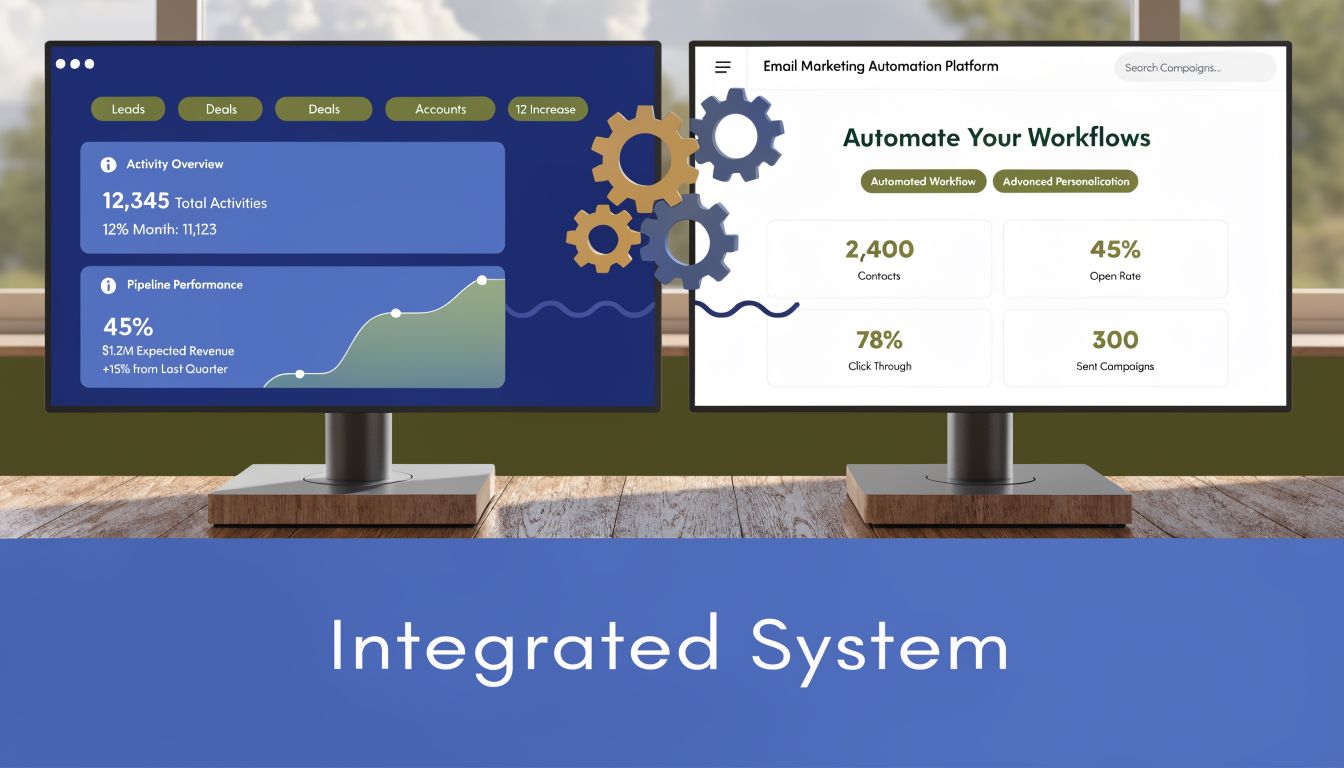
The fix is connecting email behavior to your CRM and automation layer. Email is the top revenue channel for 59% of B2B marketers, yet sales reps can miss 70 to 80% of warm leads without CRM integration according to MarketVeep's analysis of email marketing for manufacturers. In plain terms, if clicks and replies stay trapped inside the email platform, your team loses opportunities that already showed intent.
What a closed-loop workflow looks like
A good manufacturing workflow is boring in the best way. It runs the same way every time.
Say a prospect clicks a link to a spec sheet for a horizontal machining center. A connected system can:
- Tag the interest: Add a product or application tag in the CRM.
- Change status: Move the contact from general nurture to active evaluation.
- Create a task: Notify the assigned rep to follow up with context.
- Start a branch sequence: Send a more specific email path related to that machine or capability.
- Track the outcome: Show whether that engagement led to a call, quote, or opportunity.
That's what turns email into sales intelligence.
Operational insight: The click isn't the win. The win is giving a salesperson enough context to have a better conversation faster.
Often, smaller manufacturers benefit from simplifying the stack. If your team is juggling disconnected tools, it's worth reviewing platform options that match your team size and workflow. Wise Web's email platform guide is a helpful comparison resource when you're deciding whether to consolidate or keep separate systems.
Where GoHighLevel fits
GoHighLevel is useful when you need one environment for forms, pipelines, contact records, automations, and follow-up tasks. It's not the only option, but it's a practical one for small and midsize manufacturers that want fewer moving parts.
A straightforward setup inside GoHighLevel usually includes:
- Contact tags for industry, role, product interest, and source
- Pipeline stages for inquiry, qualified lead, quote, active opportunity, and customer
- Workflow triggers based on form fills, email clicks, replies, or sales actions
- Task automation so reps don't rely on memory for follow-up
- Reporting views that tie campaign engagement to pipeline movement
If you want to see one of those workflow concepts in action, this walkthrough is a useful visual reference before you build your own process:
Value isn't the software. It's the logic behind the workflow. A click on a pricing guide should trigger a different response than a click on a maintenance article. A customer who reorders parts should move into a different path than a new lead requesting first-time information.
This is also the right place to mention one implementation option. Machine Marketing works with manufacturers that already have tools in place but need the system design, CRM structure, and automation logic to connect marketing activity with sales execution. That's often the missing layer.
If your sales reps still ask, “Who should I call first?” the system isn't finished. A connected CRM should answer that every day.
Fueling the Engine Deliverability and Technical Health
A lot of manufacturers ignore deliverability because it feels technical and secondary. It isn't secondary. If your emails don't reach the inbox, the rest of the program doesn't matter.
Think of this as maintenance. You wouldn't run a machine without basic service checks and expect consistent output. Email infrastructure works the same way.
Authentication is not optional
SPF, DKIM, and DMARC are basic trust signals for your sending domain. They help mailbox providers verify that your emails are legitimate and not spoofed.
The cost of ignoring that setup is real. Unverified sends have a 14.3% bounce rate, compared with 2% for compliant senders, and proper authentication can prevent a 15 to 20% loss in inbox placement according to Gushwork's guide to email marketing for manufacturers.
That's why this isn't an IT side project. It's revenue protection.
If your team says, “Our open rates are fine sometimes,” that's not proof your setup is healthy. It's often proof that deliverability is inconsistent.
Sender choices affect trust
The address and sender name matter more than many realize.
A generic sender like info@, sales@, or support@ creates distance. In industrial sales, buyers often respond better when the email clearly comes from a real person tied to the account, region, or product category. The goal isn't to fake one-to-one outreach. The goal is to make the message feel accountable.
Other practical choices help too:
- Match subject line to content: Don't promise one thing and deliver another.
- Keep formatting clean: Dense layouts and too many competing links dilute attention.
- Send only to relevant segments: Relevance supports engagement, and engagement supports deliverability.
If your team wants a broader operational checklist, this guide on improving sales email inbox rates is a solid companion to our own breakdown of email deliverability best practices for manufacturers.
A simple maintenance routine
Most deliverability issues become visible before they become severe, but only if someone is watching.
Use a recurring review process:
- Weekly: Check bounces, complaints, and obvious drops in engagement.
- Monthly: Review inactive segments, recent imports, and sequence performance.
- Quarterly: Clean the list, review sending patterns, and validate that your audience structure still reflects the business.
The trade-off here is straightforward. More aggressive sending can squeeze short-term exposure out of a list, but if the content isn't useful and the infrastructure isn't healthy, the penalty shows up later in missed inbox placement and weaker trust.
The best deliverability strategy is usually the least flashy one. Authenticate the domain. Send relevant content. Keep the list clean. Make it easy for contacts to opt out. Then monitor the system before it slips.
Measuring and Optimizing Your System Performance
If your reporting stops at opens and clicks, you're still looking at the surface.
A CEO wants to know whether email influenced qualified leads, helped sales start better conversations, shortened follow-up lag, and contributed to revenue. Those are business questions, not just marketing questions.
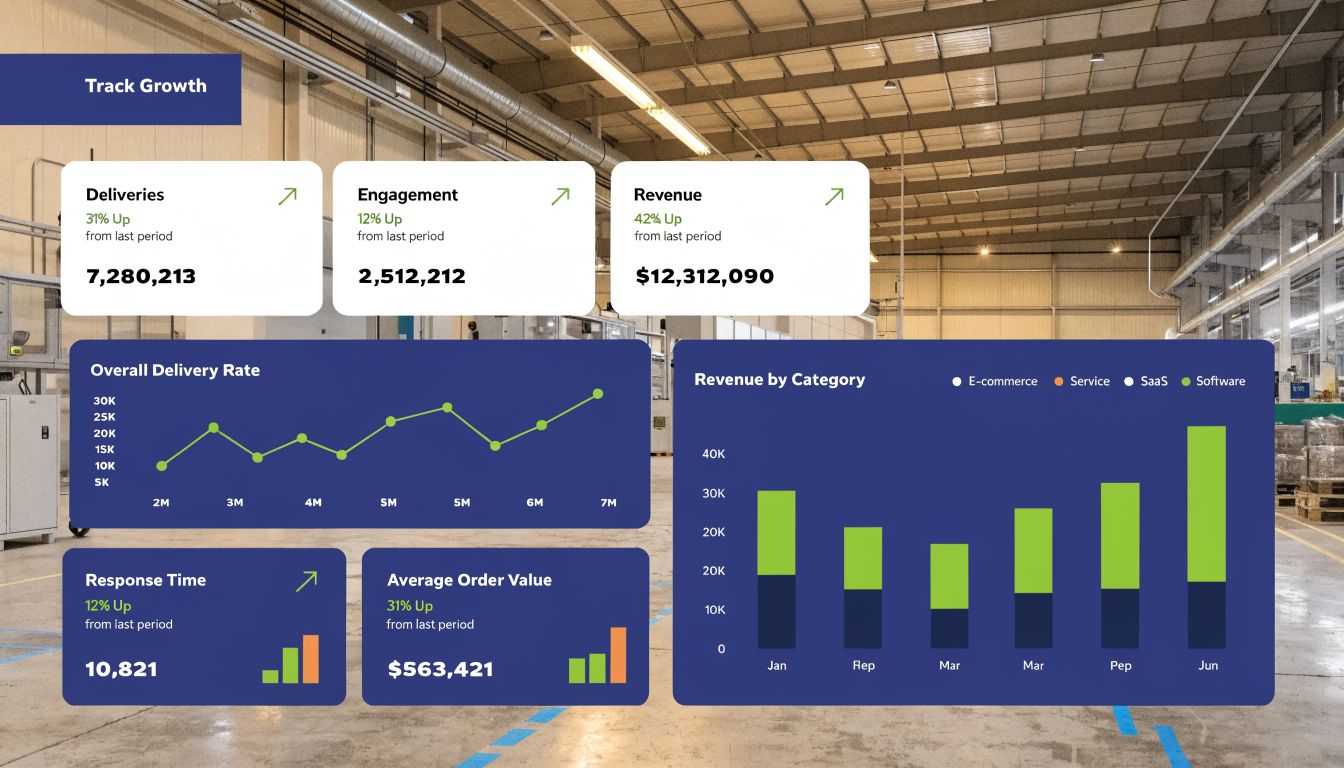
Track business outcomes first
Start by tying campaigns to actions inside the CRM.
For each campaign or automated sequence, ask:
- Did it create qualified conversations?
- Did it move contacts into later pipeline stages?
- Did sales follow up on high-intent engagement?
- Did opportunities influenced by email progress faster than those without it?
- Did existing customers take a desired action such as reorder, expand, or request support?
Those questions change how you build reports. Instead of celebrating a decent open rate in isolation, you look at which messages generated replies, meetings, quote requests, and deal movement.
A practical dashboard for manufacturers should include both engagement and sales indicators. Engagement helps diagnose. Sales outcomes prove value.
Use campaign data to improve decisions
Optimization doesn't require a complicated testing lab. It requires discipline.
Test one variable at a time where possible. Subject line framing, CTA wording, send timing, content format, and audience segment are all useful levers. In manufacturing, small wording changes can matter because buyers respond differently to technical depth, urgency, and commercial framing.
A few good tests look like this:
| Test area | Version A | Version B | What you learn |
|---|---|---|---|
| Subject line | Product-focused | Problem-focused | Which angle gets more initial interest |
| CTA | Download spec sheet | Talk to an engineer | Whether buyers want self-service or contact |
| Content type | Technical guide | Application example | What builds confidence faster |
| Audience split | Engineers | Procurement | Which message belongs to which role |
The point of testing isn't to chase a prettier email metric. It's to learn how your buyers make decisions.
Keep the interpretation grounded. A campaign with modest clicks may still be valuable if it triggered the right sales conversations. On the other hand, a high-engagement campaign that never influences pipeline may be interesting content but weak commercial content.
Over time, your system should answer increasingly useful questions. Which industries respond to which offers? Which product categories generate repeat engagement? Which sales reps act fastest on warm leads? Which email paths create the most reliable handoff to quoting?
That's when email marketing for manufacturers becomes a management asset. You stop saying, “We sent an email.” You start saying, “This sequence generated buyer activity, sales follow-up, and pipeline movement, and here's what we're improving next.”
If you want help diagnosing your current system, Machine Marketing works with manufacturers to connect email, CRM, content, and follow-up into a measurable lead generation engine. If your tools exist but the system doesn't, that's the next problem to solve.